How I Structure My Yoga Classes: A Nervous System-Informed Approach to Movement, Breath and Rest
While I vary my classes slightly each week, they always follow a similar structure, and there is a very intentional reason behind that.
It is not random sequencing. It is shaped by how the nervous system responds to rhythm, breath, movement and rest.
If I had to visualise it, I often think of a bell curve. Let me explain…
Arriving as you are
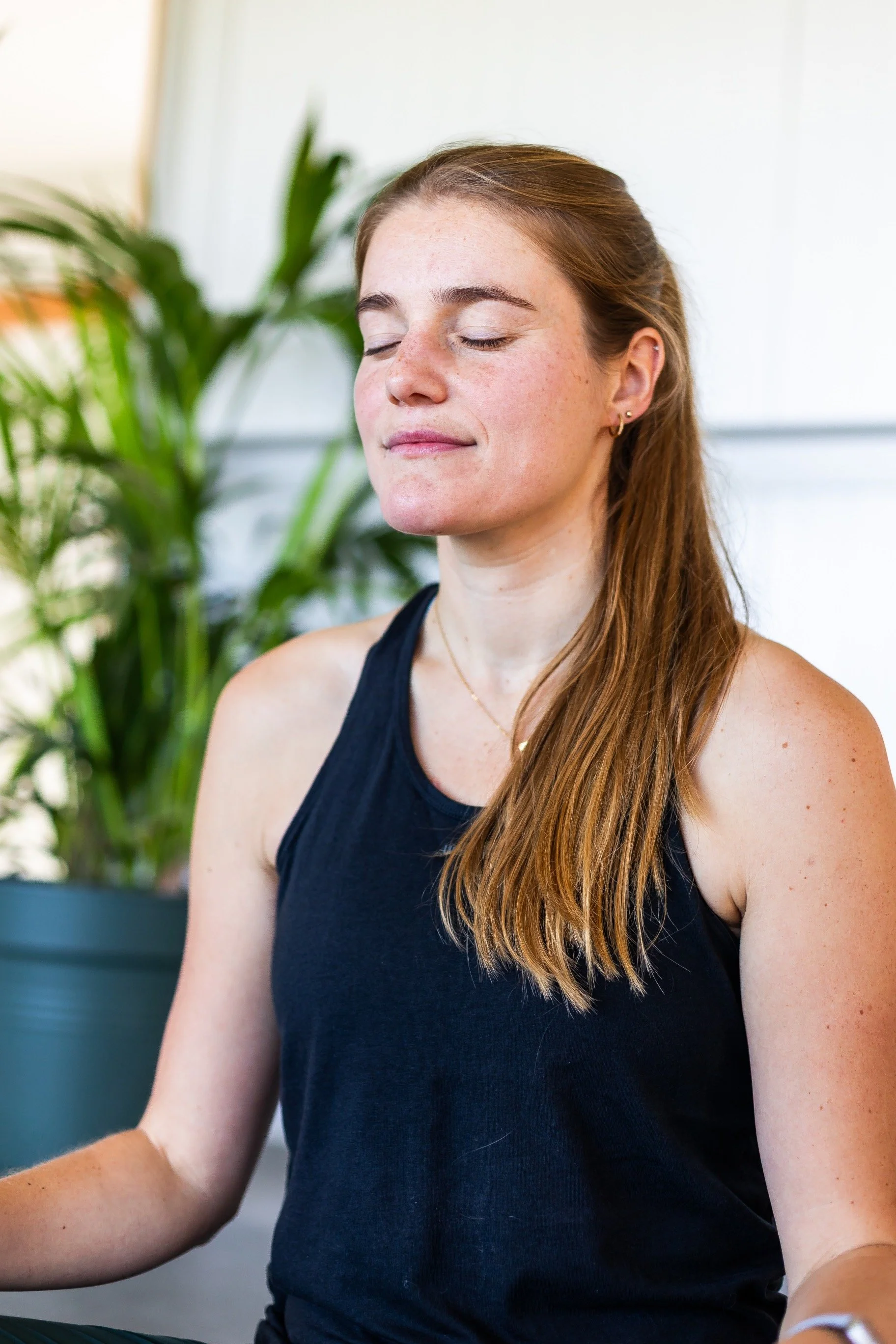
We begin every class with a short mindfulness practice or guided meditation.
This creates a transition space, a pause between external life and internal awareness. A moment to arrive without needing to change, fix or perform anything.
From a nervous system perspective, this is where we gently begin moving away from a more “doing” state and into something more regulated and present. Even a few minutes of conscious breathing can support parasympathetic activity, the part of the nervous system linked with rest, digestion and recovery.
Slow breathing and yoga-based breathwork have been associated with this shift towards rest and repair states in the body.
Although this opening feels simple, quite a lot is happening underneath the surface. It is essentially giving the system permission to slow down, rather than forcing it to.
Building energy through movement
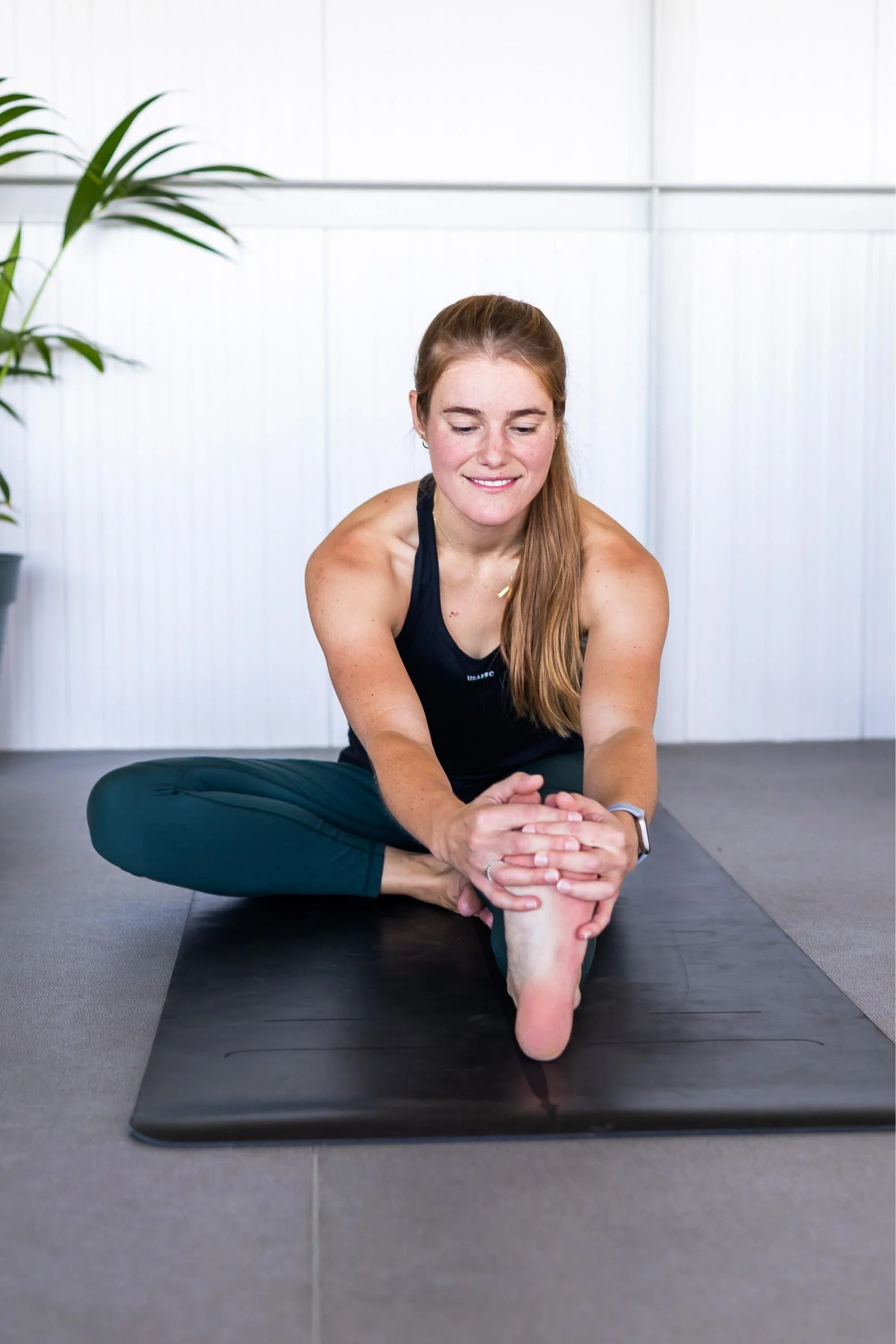
From there, we start to move.
We gradually build into standing postures, linking breath with movement and creating flow through the body. Heat builds, focus sharpens and awareness becomes more embodied.
Something interesting happens here beyond the physical practice.
Coordinating breath and movement supports interoception, which is our ability to sense what is happening inside the body. This internal awareness is closely linked with emotional regulation and steadiness of attention. So we are not just moving the body, we are also learning to feel and listen to it more clearly.
Research into yoga and mind–body practices suggests benefits in autonomic regulation and stress resilience, including improvements in markers such as heart rate variability over time.
So this phase is not just about energy. It is also about connection, awareness and building a steadier relationship with your internal state.
The peak and the turning point
Around the halfway point, we begin to shift downward.
We move closer to the ground, reduce intensity and gradually slow the pace. This transition matters, not just physically but physiologically too.
After periods of effort or sustained focus, the nervous system benefits from clear cues of safety and downregulation. Without that contrast, the body can sometimes remain subtly activated even when the movement has stopped.
So we begin to unwind.
Breath naturally softens, muscles release more gradually and the system starts to downshift. This is where slower, more rhythmic breathing can support balance and help the body move back towards steadier regulation.
Returning to stillness
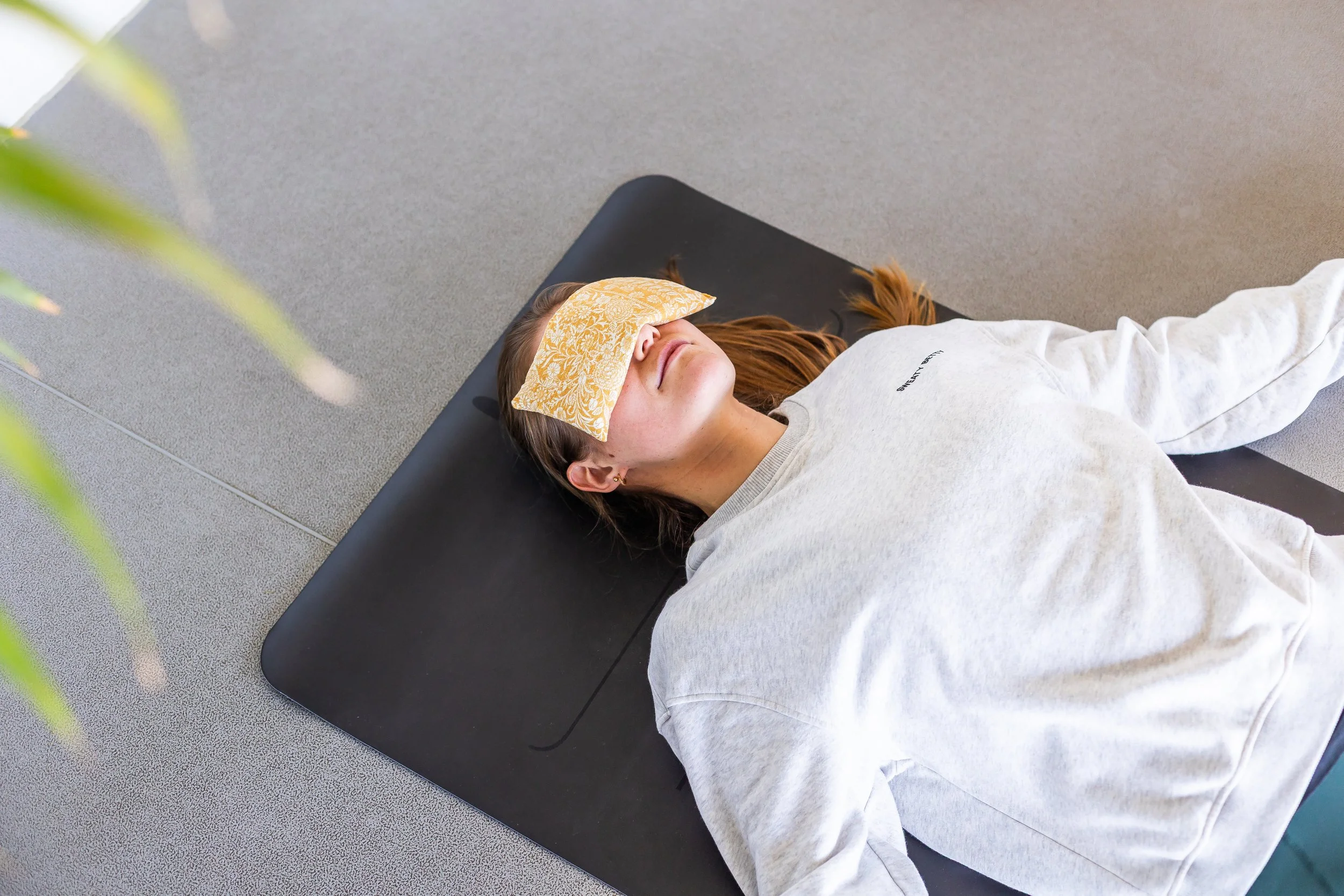
And then we arrive at Savasana.
This is the moment where everything stops. You lie down, supported, and simply breathe. Many people’s favourite part!
On the surface it can look like rest, but internally it is an important integration phase.
Savasana is often described in contemporary yoga and physiology discussions as a form of active rest, where the nervous system settles into parasympathetic dominance and begins to integrate the effects of movement and breathwork.
It is not doing nothing in a passive sense. It is the body processing, reorganising and restoring.
This is also where everything from earlier in the class starts to land. The movement, the breath, the awareness, it all has space to settle rather than simply stop abruptly.
A bell curve of movement and rest
My classes follow a bell curve of nervous system activity as shown below, moving from stillness, to activation, to a peak, and back into rest and integration.
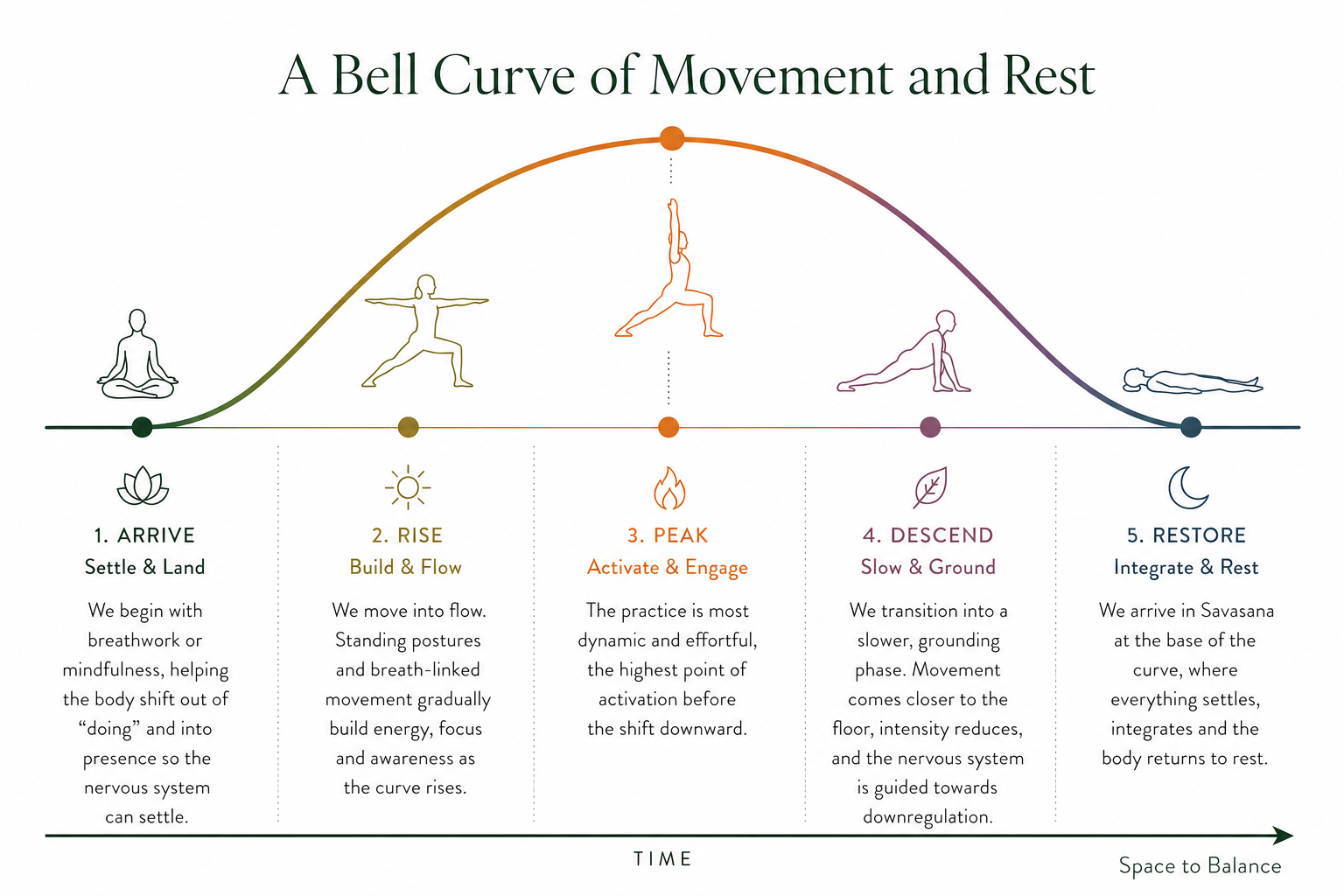
Summarised, it works like this:
We begin with breathwork or mindfulness, helping the body shift out of “doing” and into presence so the nervous system can settle.
From there, we move into flow. Standing postures and breath-linked movement gradually build energy, focus and awareness as the curve rises.
At the peak, the practice is most dynamic and effortful, the highest point of activation before the shift downward.
We then transition into a slower, grounding phase. Movement comes closer to the floor, intensity reduces, and the nervous system is guided towards downregulation.
Finally, we arrive in Savasana at the base of the curve, where everything settles, integrates and the body returns to rest.
In essence, the class flows as a cycle: quiet arrival, building energy, peak, soft landing, and deep stillness. The aim is to guide the body smoothly between states, rather than jumping between them.
Why the ending matters so much
I really believe the end of a yoga class is just as important as everything that comes before it.
Without this phase, the practice can become all activation and no integration.
In everyday life, we do not often give ourselves permission to fully rest without distraction. So Savasana becomes more than just a posture. It becomes a nervous system reset point, a space where nothing is required of you, and the body is allowed to return to its own baseline.
Why I structure classes this way
I know what it feels like to rush through the day, moving from one thing to the next without really landing anywhere.
That understanding sits at the heart of how I teach.
My intention is to create a class that meets people exactly where they are when they arrive, then gently guides them through a full arc, from arrival, to movement, to release, and finally to rest.
It is less about achieving anything and more about supporting a return to balance, a sense of coming back into yourself.
I’ve seen this approach work its magic week on week since I started teaching in 2018, and my aim is to facilitate more people experiencing the positive effect this can have on your day to day life.
An open invitation
If this way of moving, breathing and settling resonates with you, you are very welcome to join a class.
No pressure, no expectation, just an open space to arrive as you are and experience it for yourself.
You can book a class at any time via my booking page here.
